
Discover the World of Athlete Founders
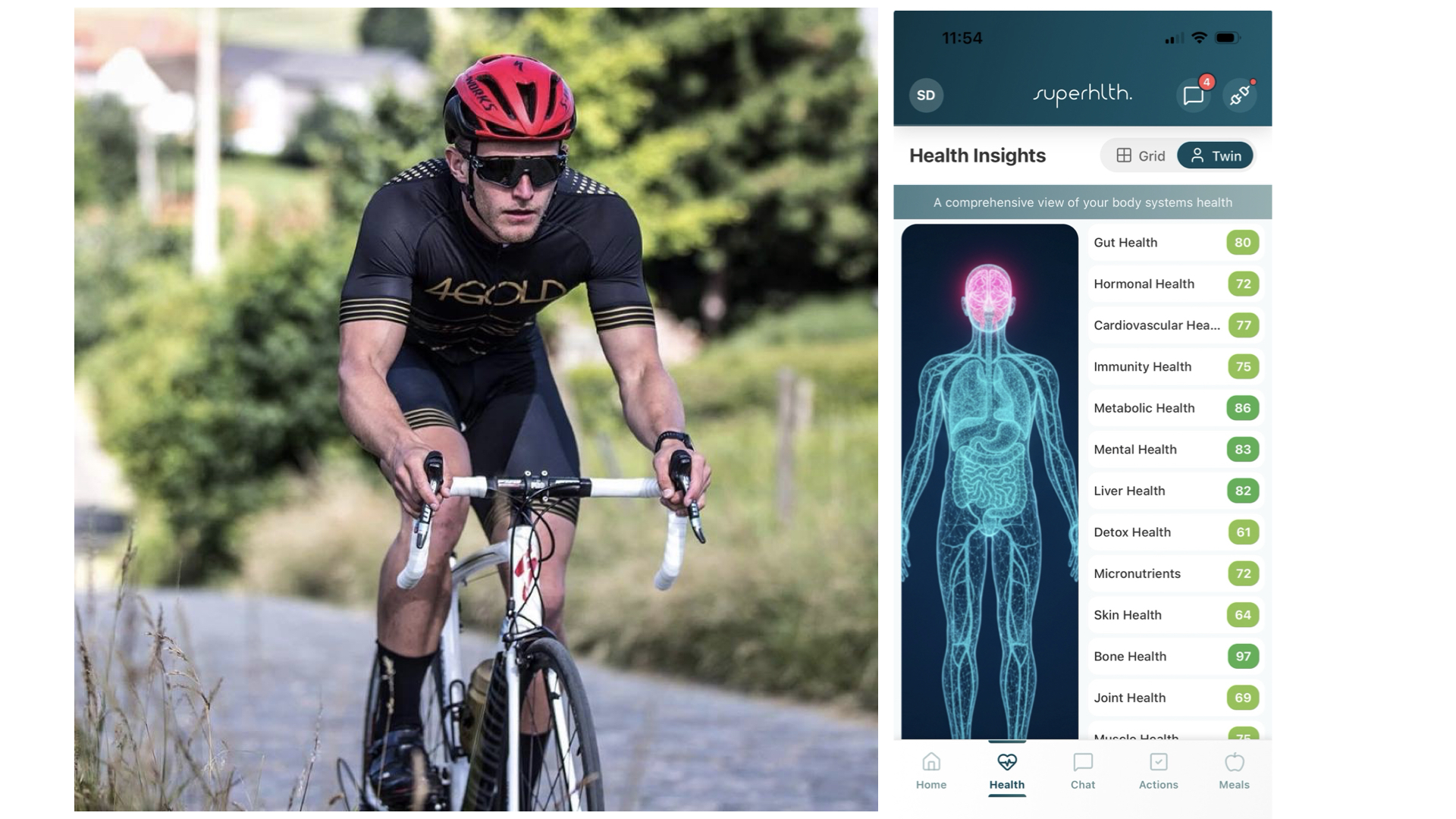
Athlete Founder: Brent Luyckx (Former Cyclist)
The Belgians are doing well in the World of Athlete Founders 🇧🇪! Former Belgian cyclist Brent Luyckx is launching his new health startup, Superhlth, today!
His own past health struggles, which ended his pro cycling career, became the inspiration for launching a solution.
"At three, I was temporarily paralyzed due to Lyme disease. As a professional cyclist, I collapsed twice from heat stroke and decided to quit. At 22, after years of misdiagnoses, I underwent a life-or-death surgery for Crohn's disease, which I still live with today." - Brent Luyckx
He realized one thing very clearly:
- His body is not your body.
- His triggers are not your triggers.
- What works for someone else may do nothing for him.
Yet, 99% of health advice is still generic. We're being "health-influenced" on Instagram and TikTok by people with entirely different bodies and needs.And even though we have more health data than ever, it's scattered everywhere—across apps, PDFs, wearables, and other platforms.We're drowning in data but starving for personal answers.
His startup, Superhlth, is built to solve exactly that: a platform that understands your body, not the body of the "average person," and where all of your biology is interpreted together, not as separate fragments. Turning complexity into clarity.
This is another proof point that athletes are very strong entrepreneurs. They have the determination, the drive, consistency, and know how to deal with pressure.
It's really a matter of finding the right business idea in which you feel strong and interested - he definitely found his match!I am on a mission to prove that pro athletes can have exciting careers as entrepreneurs!
Book Recommendation for Athlete Founders
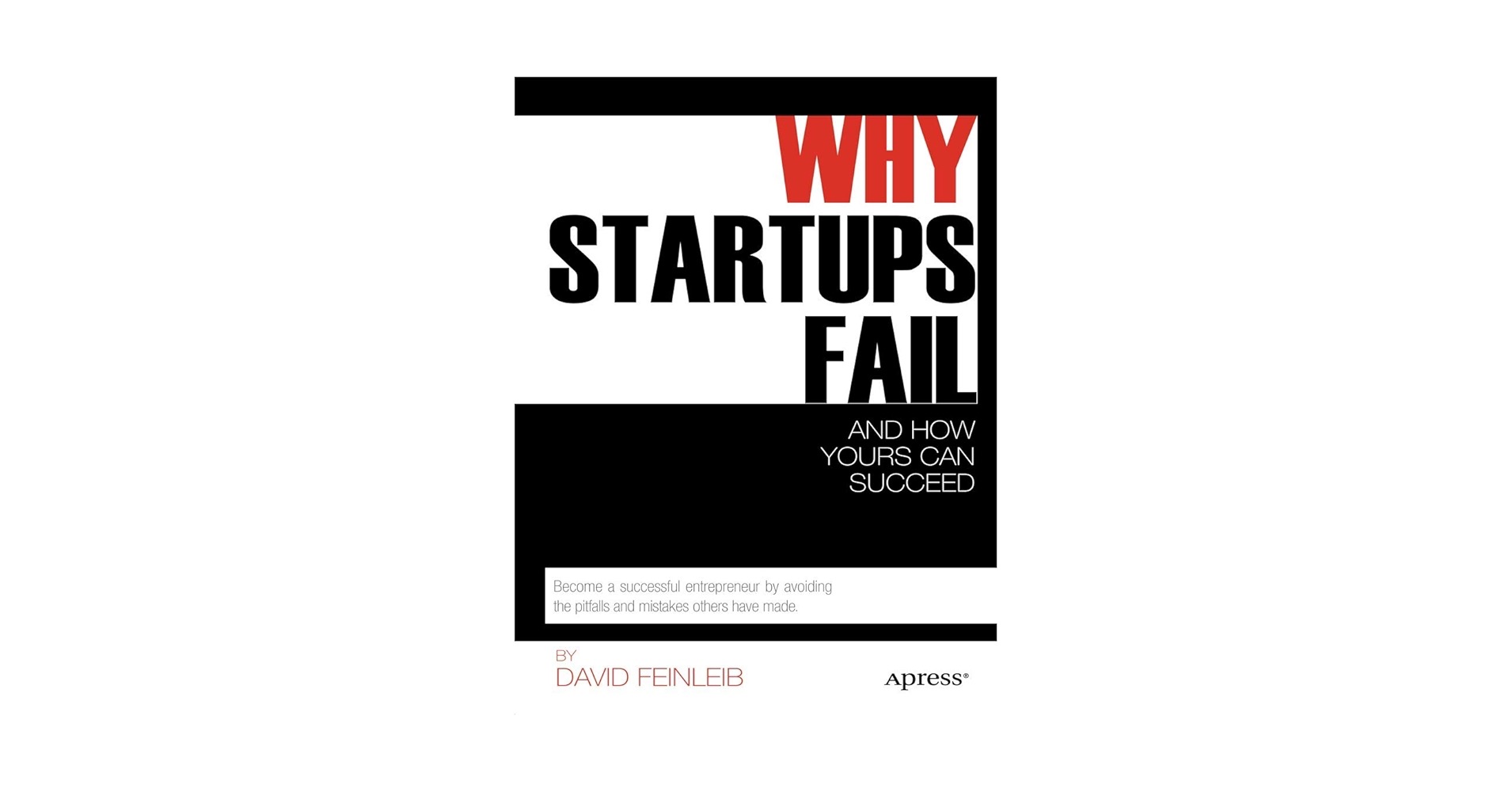
My favorite book recommendation for athletes wanting to become entrepreneurs: read a book on how NOT to run a startup.
After a decade in scale-ups, early-stage startups, and launching my own company, I've encountered many costly mistakes. Most of them were captured in one book: "Why Startups Fail: And How Yours Can Succeed."
A big barrier for athletes is uncertainty. Beyond taking action, one of the best ways to gain confidence is inversion thinking: think about why your startup would fail. This helps you spot problems early and avoid them.
How to do this? Read books like this one and learn from other athlete founders with similar business ideas.
It's a technique used by Charlie Munger, Warren Buffett's business partner.
My mission with Athlete Founders is simple: help athletes become entrepreneurs. Athletes have the right skills—you just need to know which business idea to pursue, what partners you need, and how to get started with your time and money limits.
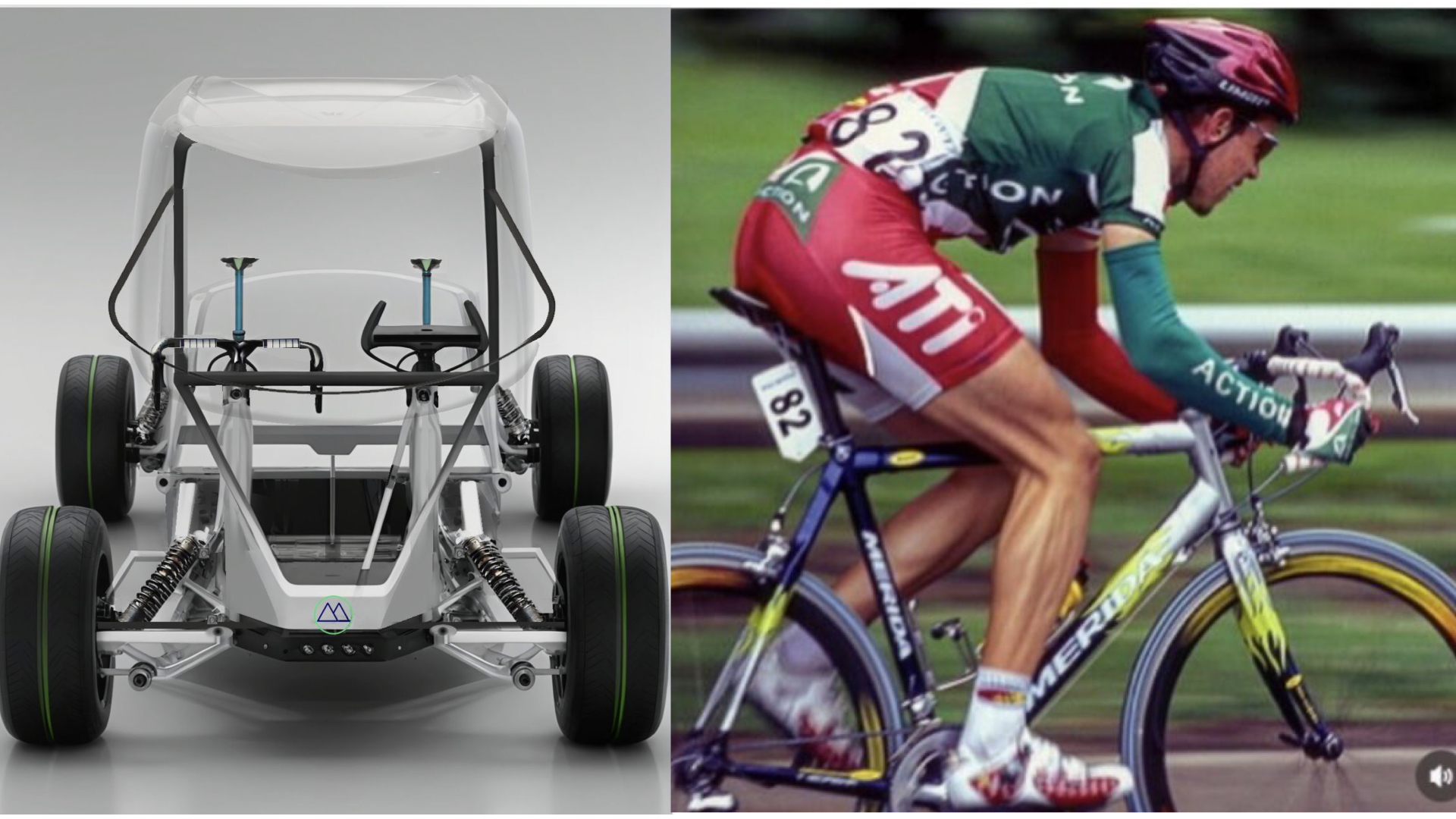
Athlete Founder: Dennis Kraft (Former Cyclist)
Dennis Kraft
a former German pro cyclist, founded the OXYDrive eQuadricycle, a futuristic bicycle-car hybrid inspired by his experience as a pro cyclist.
“36,000 kilometers on a bike a year taught me one thing: motion has a rhythm — and design should follow it.” - Dennis Kraft
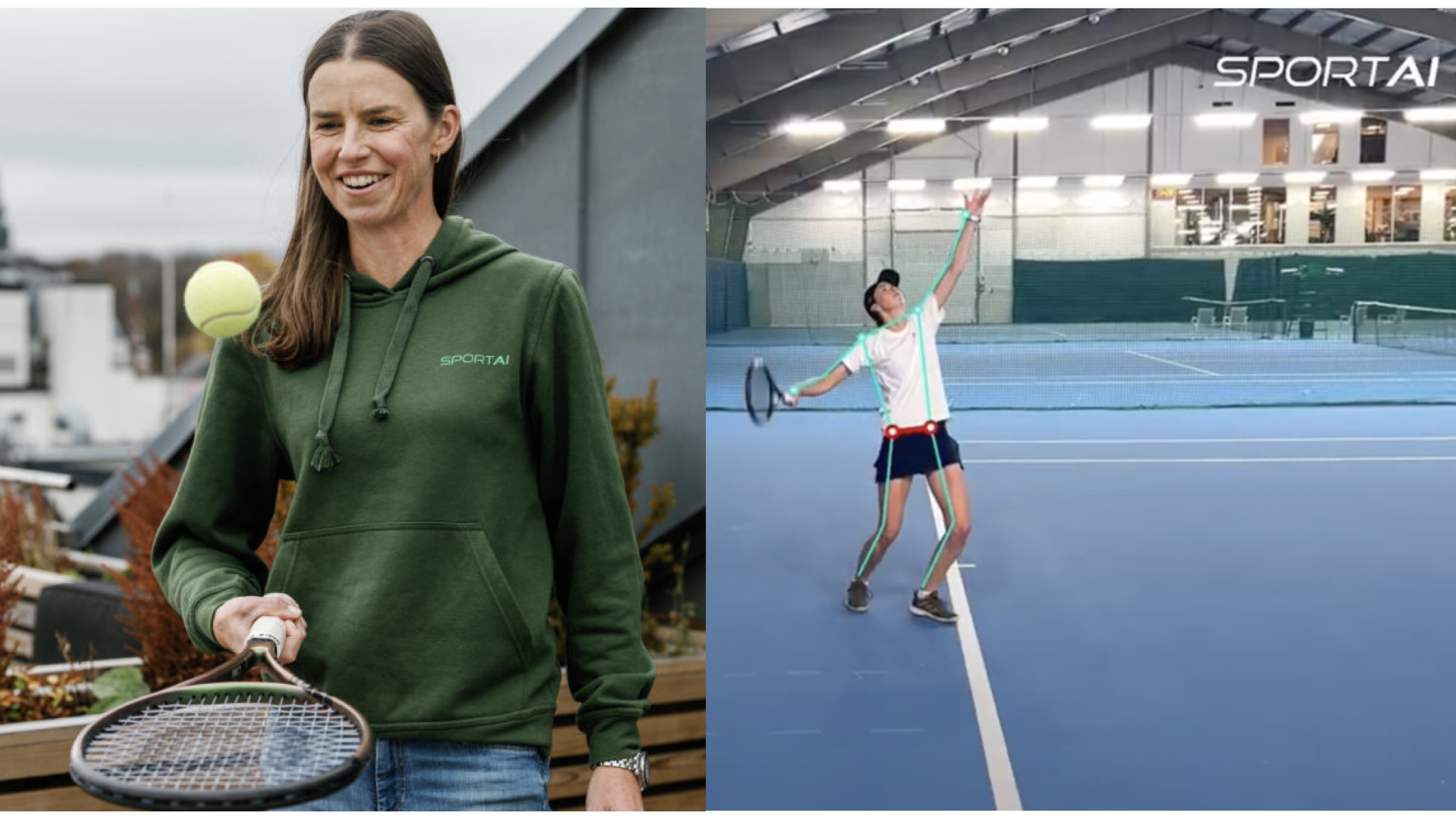
Athlete Founder: Lauren Pedersen (Former Tennis Player)
Lauren Pedersen
Your biggest challenge as an athlete might just be your best business idea 🎾
Former pro tennis player Lauren Pedersen turned her lack of access to elite tennis coaching in New Zealand into SportAI, now bringing world-class sports analysis to athletes everywhere.
Success for Athlete Founders comes from matching their unique experience with business ideas that align with their passion and strengths, paired with co-founders who bring complementary skills.
Athlete Founder: Ashkan Joshghani (Former Brazilian Jiu-Jitsu)
Ashkan Joshghani
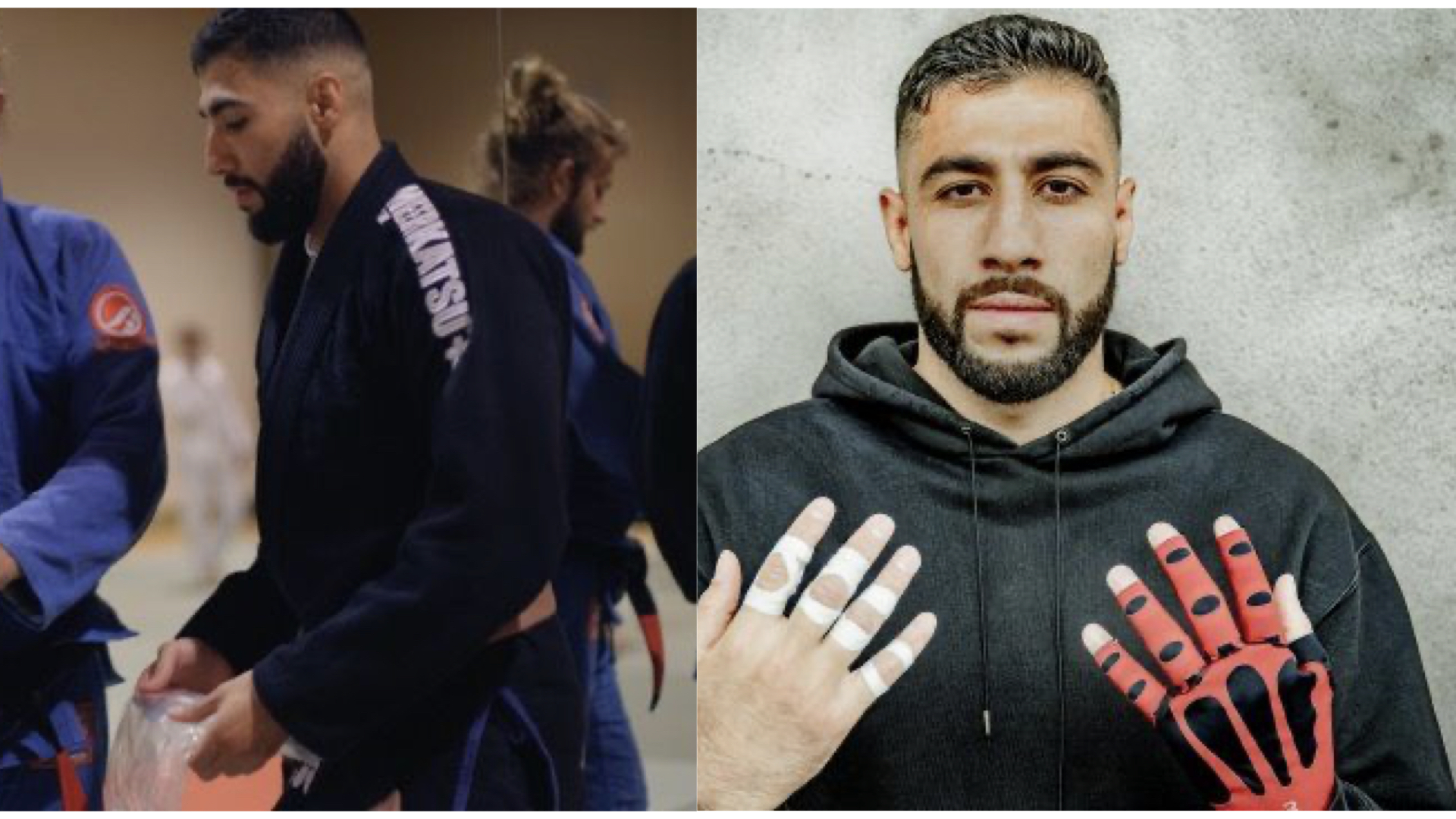
Belgian jiu-jitsu athlete 🥋 Ashkan Joshghani experienced, just like a lot of his fellow athletes, a sport that doesn't come without difficulties especially related to the finger joints.
During his sport, Ashkan experienced 'first-hand' the disadvantages of taping. It loosens rather quickly when rolling and sweating.He realized it's time to dive deeper into his true passion.
He combined his medical know-how with his practical experience in the sport and launched Exoligamentz.He came up with an alternative to sports tape: a protective sports glove.
An innovation that challenges not only the repetitive price tag of taping, but also the fact that it's very time-consuming and often not practical putting on and taking off.
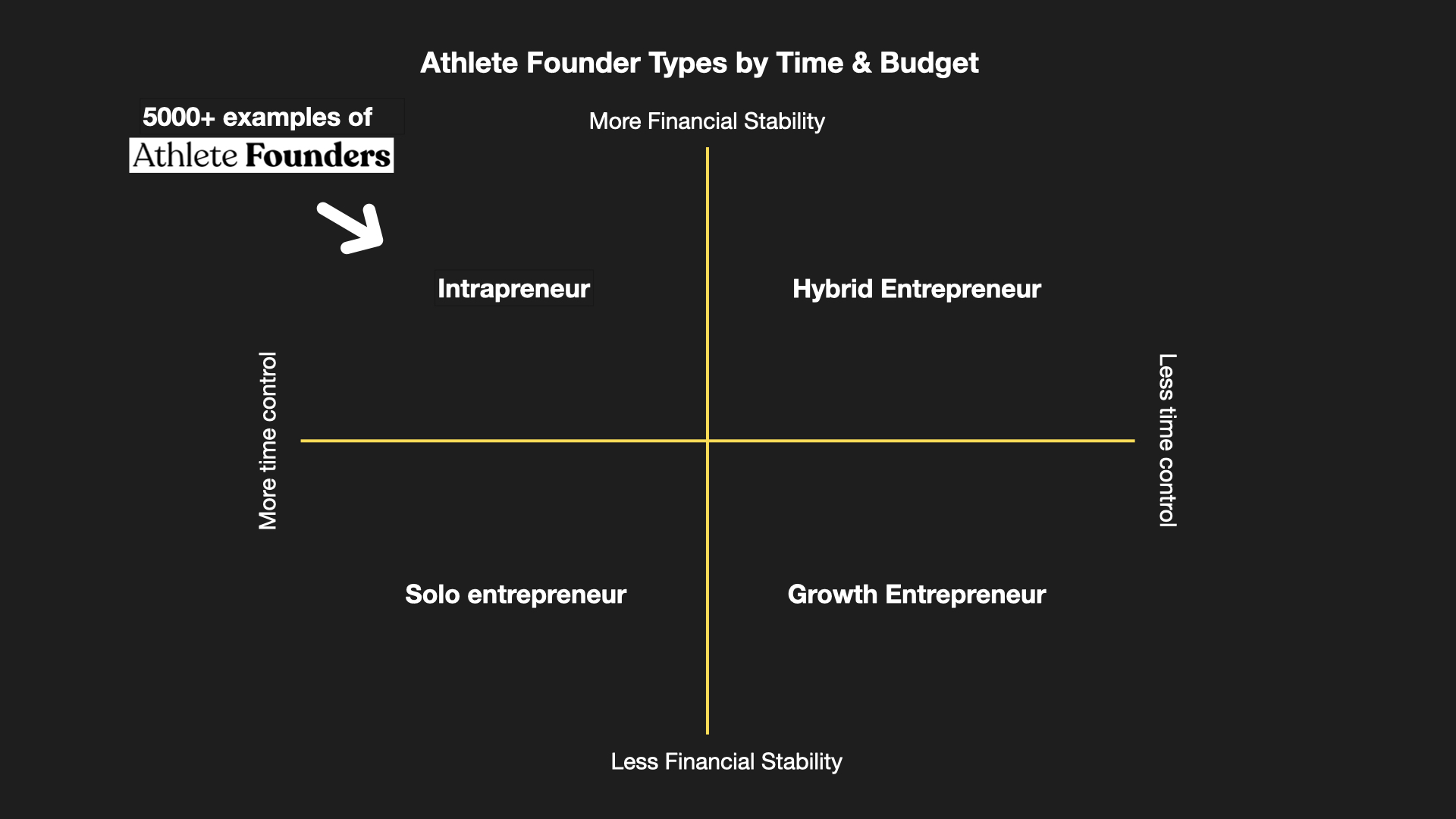
Framework: Type of Athlete Founder
Type of Athlete Founder Framework
The Most Overlooked Decision for Athletes Turning Entrepreneurs: Choose the Right Model FirstOne truth: athletes share the same traits as successful entrepreneurs.Yet many aspiring Athlete Founders don't get started or succeed because it didn't fit their lifestyle.
Common reasons:
"I need financial stability, I have a family to support"
"I want time with my family and can't risk being away again"
Every athlete has different needs for time control and financial stability. Yet more than often, we see entrepreneurship as a one-size fits all.
The good news? After analyzing 5000+ athlete founders, I identified 4 entrepreneurial models fitted to different time control and financial stability preferences:
Need to replace your salary quickly?
Consider intrapreneurship (act as an entrepreneur within an existing company or startup)
Want more control over your time?
Explore solo entrepreneurship, launch your own service with full control over how you set it up.
Want world domination?
The growth entrepreneur path (building for scale and VC funding) means less control, high uncertainty, and intense competition where speed dominates.
Want both the financial stability yet also explore a business idea?
The hybrid entrepreneur works part-time for financial stability while working on a business idea on the side. 👉 this is how I operate at the moment There's nuance to each model.
See this model more as a starting point. You can always gain more financial stability through external financing, or time control through operational leaders who can take over at some point. Assess business ideas through this lens. It's part of the Athlete Founder-Market Fit which is about aligning your interests, strengths, resources and complementary partners with how you can compete in a market.
Athlete Founder: Julien Jané (Former Rugby Player)
Julien Jané
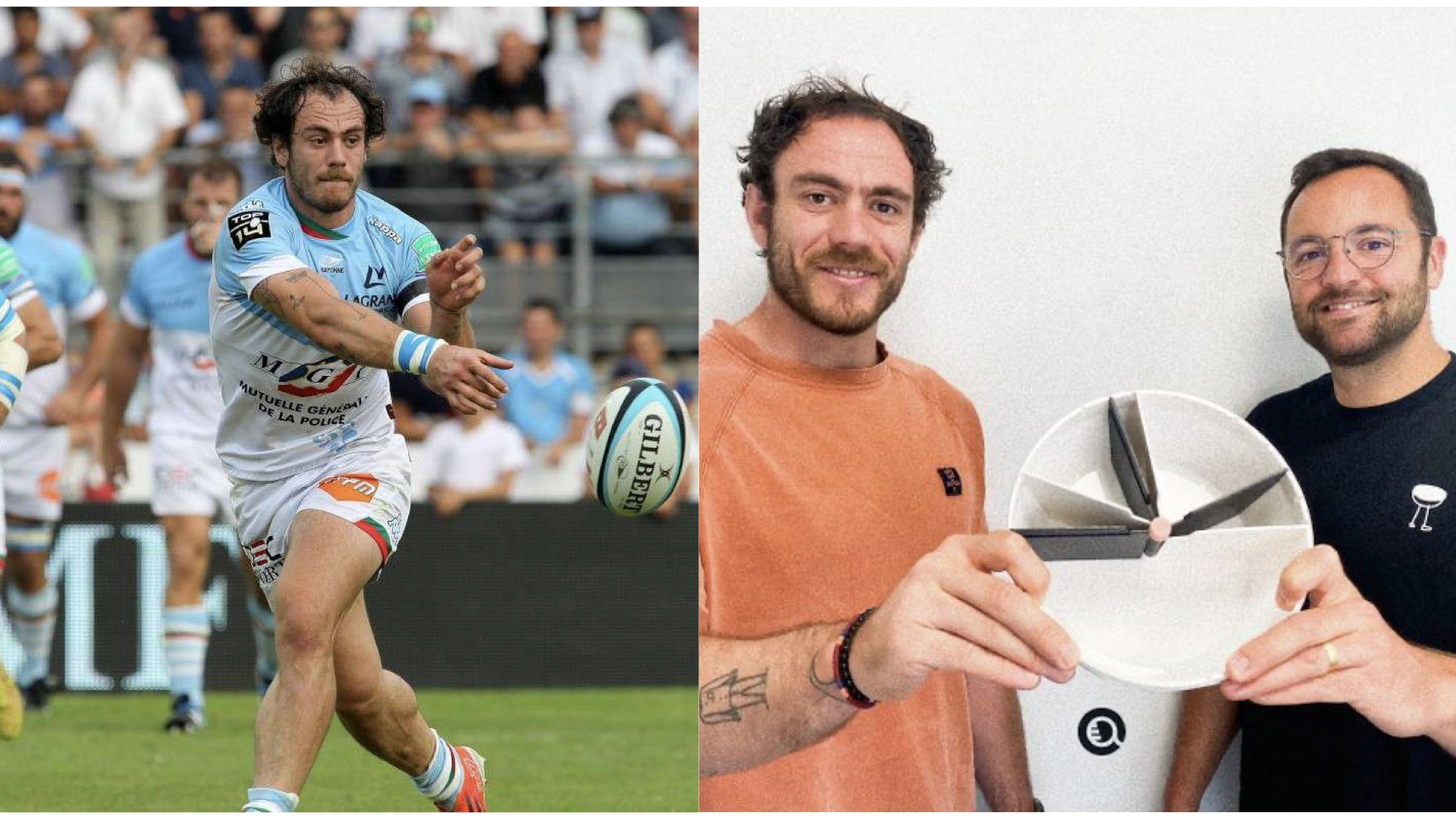
From professional rugby player to athlete founder of a Smart Bowl startup, the story of Julien Jané 🥣
His company, maju, has 50,000 users and €4 million in revenue.
In my previous post, I talked about how athlete challenges can become great business opportunities. Julien's story validates this:
As an elite athlete, he worked with a dietitian friend who told him to measure his food and count protein intake. This was hell for Julien, just as it was for many others facing the same task.
He always had an idea in mind, but it wasn't until he stopped competing that he pursued it.
At the end of his rugby career, he didn't want to stay in the sport, he was drawn to the challenges, human adventure, resilience, and constant questioning that entrepreneurship offers.
He joined an entrepreneurial business program where he could directly apply business learnings to his own project.
The result:The Maju smart bowl uses three adjustable compartments (vegetables, protein, starches) to help users portion meals according to their nutritional needs, connected to an app that provides personalized dietary guidance.
It removes the mental load of following a nutrition program - making healthy eating simple, accessible, and effortless.
My best recommendation for aspiring Athlete Founders: choose entrepreneurial programs where you can learn and apply immediately.Generic business programs are too broad and often leave you unsatisfied.
Book Recommendation for Athlete Founders
My favorite book recommendation for athletes wanting to become entrepreneurs: read a book on how NOT to run a startup.
After a decade in scale-ups, early-stage startups, and launching my own company, I've encountered many costly mistakes. Most of them were captured in one book: "Why Startups Fail: And How Yours Can Succeed."
A big barrier for athletes is uncertainty. Beyond taking action, one of the best ways to gain confidence is inversion thinking: think about why your startup would fail. This helps you spot problems early and avoid them.
How to do this? Read books like this one and learn from other athlete founders with similar business ideas.
It's a technique used by Charlie Munger, Warren Buffett's business partner.
My mission with Athlete Founders is simple: help athletes become entrepreneurs. Athletes have the right skills—you just need to know which business idea to pursue, what partners you need, and how to get started with your time and money limits.
Framework: Type of Athlete Founder
Type of Athlete Founder Framework
The Most Overlooked Decision for Athletes Turning Entrepreneurs: Choose the Right Model FirstOne truth: athletes share the same traits as successful entrepreneurs.Yet many aspiring Athlete Founders don't get started or succeed because it didn't fit their lifestyle.
Common reasons:
"I need financial stability, I have a family to support"
"I want time with my family and can't risk being away again"
Every athlete has different needs for time control and financial stability. Yet more than often, we see entrepreneurship as a one-size fits all.
The good news? After analyzing 5000+ athlete founders, I identified 4 entrepreneurial models fitted to different time control and financial stability preferences:
Need to replace your salary quickly?
Consider intrapreneurship (act as an entrepreneur within an existing company or startup)
Want more control over your time?
Explore solo entrepreneurship, launch your own service with full control over how you set it up.
Want world domination?
The growth entrepreneur path (building for scale and VC funding) means less control, high uncertainty, and intense competition where speed dominates.
Want both the financial stability yet also explore a business idea?
The hybrid entrepreneur works part-time for financial stability while working on a business idea on the side. 👉 this is how I operate at the moment There's nuance to each model.
See this model more as a starting point. You can always gain more financial stability through external financing, or time control through operational leaders who can take over at some point. Assess business ideas through this lens. It's part of the Athlete Founder-Market Fit which is about aligning your interests, strengths, resources and complementary partners with how you can compete in a market.
Athlete Founder: Brent Luyckx (Former Cyclist)
The Belgians are doing well in the World of Athlete Founders 🇧🇪! Former Belgian cyclist Brent Luyckx is launching his new health startup, Superhlth, today!
His own past health struggles, which ended his pro cycling career, became the inspiration for launching a solution.
"At three, I was temporarily paralyzed due to Lyme disease. As a professional cyclist, I collapsed twice from heat stroke and decided to quit. At 22, after years of misdiagnoses, I underwent a life-or-death surgery for Crohn's disease, which I still live with today." - Brent Luyckx
He realized one thing very clearly:
- His body is not your body.
- His triggers are not your triggers.
- What works for someone else may do nothing for him.
Yet, 99% of health advice is still generic. We're being "health-influenced" on Instagram and TikTok by people with entirely different bodies and needs.And even though we have more health data than ever, it's scattered everywhere—across apps, PDFs, wearables, and other platforms.We're drowning in data but starving for personal answers.
His startup, Superhlth, is built to solve exactly that: a platform that understands your body, not the body of the "average person," and where all of your biology is interpreted together, not as separate fragments. Turning complexity into clarity.
This is another proof point that athletes are very strong entrepreneurs. They have the determination, the drive, consistency, and know how to deal with pressure.
It's really a matter of finding the right business idea in which you feel strong and interested - he definitely found his match!I am on a mission to prove that pro athletes can have exciting careers as entrepreneurs!
Athlete Founder: Dennis Kraft (Former Cyclist)
Dennis Kraft
a former German pro cyclist, founded the OXYDrive eQuadricycle, a futuristic bicycle-car hybrid inspired by his experience as a pro cyclist.
“36,000 kilometers on a bike a year taught me one thing: motion has a rhythm — and design should follow it.” - Dennis Kraft
Athlete Founder: Lauren Pedersen (Former Tennis Player)
Lauren Pedersen
Your biggest challenge as an athlete might just be your best business idea 🎾
Former pro tennis player Lauren Pedersen turned her lack of access to elite tennis coaching in New Zealand into SportAI, now bringing world-class sports analysis to athletes everywhere.
Success for Athlete Founders comes from matching their unique experience with business ideas that align with their passion and strengths, paired with co-founders who bring complementary skills.
Athlete Founder: Ashkan Joshghani (Former Brazilian Jiu-Jitsu)
Ashkan Joshghani
Belgian jiu-jitsu athlete 🥋 Ashkan Joshghani experienced, just like a lot of his fellow athletes, a sport that doesn't come without difficulties especially related to the finger joints.
During his sport, Ashkan experienced 'first-hand' the disadvantages of taping. It loosens rather quickly when rolling and sweating.He realized it's time to dive deeper into his true passion.
He combined his medical know-how with his practical experience in the sport and launched Exoligamentz.He came up with an alternative to sports tape: a protective sports glove.
An innovation that challenges not only the repetitive price tag of taping, but also the fact that it's very time-consuming and often not practical putting on and taking off.
Athlete Founder: Julien Jané (Former Rugby Player)
Julien Jané
From professional rugby player to athlete founder of a Smart Bowl startup, the story of Julien Jané 🥣
His company, maju, has 50,000 users and €4 million in revenue.
In my previous post, I talked about how athlete challenges can become great business opportunities. Julien's story validates this:
As an elite athlete, he worked with a dietitian friend who told him to measure his food and count protein intake. This was hell for Julien, just as it was for many others facing the same task.
He always had an idea in mind, but it wasn't until he stopped competing that he pursued it.
At the end of his rugby career, he didn't want to stay in the sport, he was drawn to the challenges, human adventure, resilience, and constant questioning that entrepreneurship offers.
He joined an entrepreneurial business program where he could directly apply business learnings to his own project.
The result:The Maju smart bowl uses three adjustable compartments (vegetables, protein, starches) to help users portion meals according to their nutritional needs, connected to an app that provides personalized dietary guidance.
It removes the mental load of following a nutrition program - making healthy eating simple, accessible, and effortless.
My best recommendation for aspiring Athlete Founders: choose entrepreneurial programs where you can learn and apply immediately.Generic business programs are too broad and often leave you unsatisfied.